
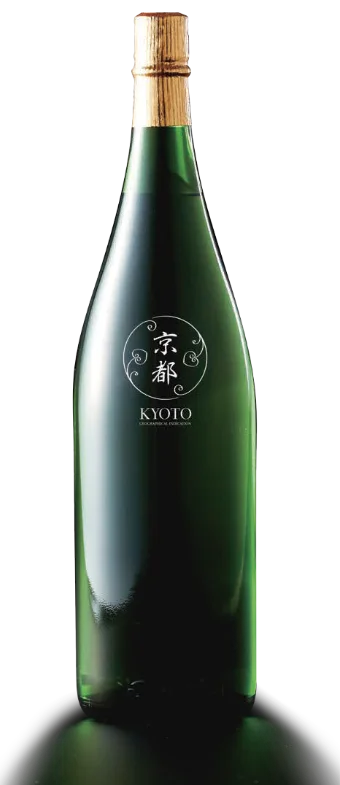
This designation was created by the Osaka Regional Taxation Bureau
GI Kyoto is a regional designation for Kyoto sake.
Designated: October 1, 2025
A geographical indication (GI) for sake is a system that certifies it is produced in the correct place of origin and in compliance with specified standards.
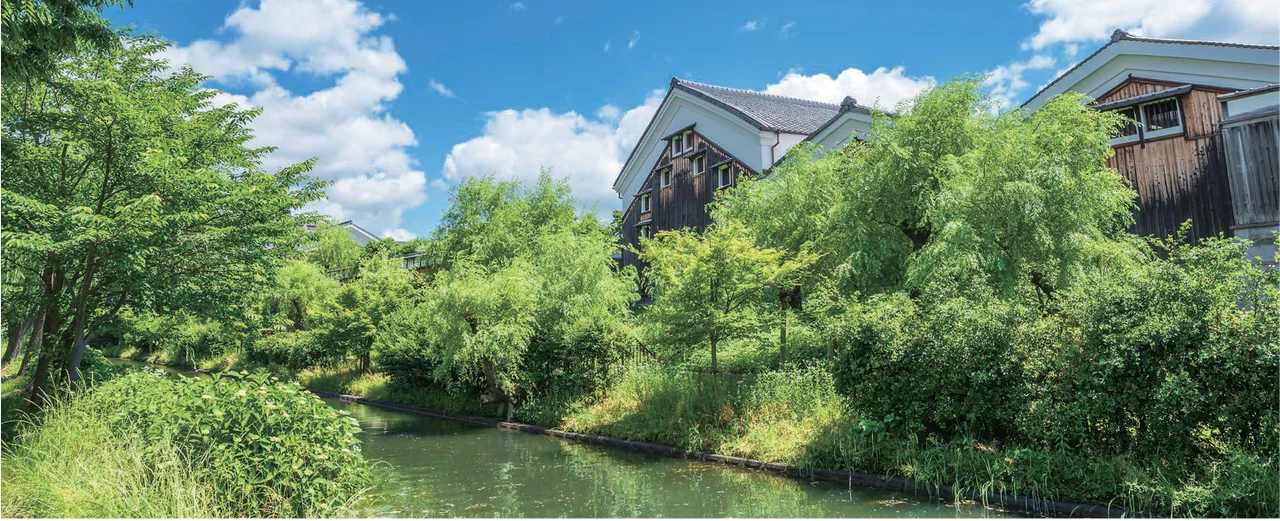
Kyoto Sake
Japanese Sake:
Born in Kyoto,
Refined in Kyoto.
Kyoto Prefecture’s Climate and Natural Features
Kyoto Prefecture is blessed with abundant water sources, thanks to the Yura and Yodogawa River
systems.
Its strata are mainly granite, and the water that passes through these layers ranges from soft to
moderately hard, bringing out the distinctive character of Kyoto’s alcoholic beverages.
In winter, the north sees heavy snowfall under the influence of the Tsushima Current, while the south
experiences the deep chill typical of a geographical basin, leading to severe cold.
Its high-quality, abundant water resources and a cold climate allow for gentle moromi (fermenting mash)
fermentation, contributing to the distinctive sake style of Kyoto.

Kyoto Sake: Developed Alongside Kyoto’s Culture
The history of sake brewing in Kyoto is ancient. In the Heian period (794 - 1185), the imperial court
established an office called the Mikinotsukasa, which handled the brewing and management of sake. The
Engishiki legal code records that specialists known as sakabe produced thirteen distinct types of sake, most
of which were made for the Emperor and the imperial court.
Kyoto also has a long history of food culture. Originating in the banquet culture of the nobility, it
developed diverse culinary traditions, including daikyo banquets, shojin vegetarian cuisine, honzen meals,
multi-course kaiseki, and obanzai side dishes. These different Kyoto cuisines were all rooted in dashi
broth. In pairing with Kyoto cuisine, which emphasizes the natural flavors of ingredients, sakes with an
elegant aroma, gentle mouthfeel, and depth of character came to be valued, ultimately leading to
improvements to sake itself.
Around the 12th century, the technique of adding steamed rice, koji malted rice, and water in stages was
established, laying the foundation for today’s three-stage method. From the 1600s onward, Kyoto actively
incorporated techniques from a variety of schools, including the Tango and Tamba master brewers, honing the
craft and cultivating advanced brewing expertise. In the late 1800s, a preservative-free method for brewing
seishu refined sake was developed, and from the early 1900s onward, seasonal brewing techniques were quickly
adopted. Kyoto sake brewing continues to evolve with the times, while remaining grounded in tradition. This
legacy supports the distinctive value of Kyoto sake.
The Flavor Profile of Kyoto Sake
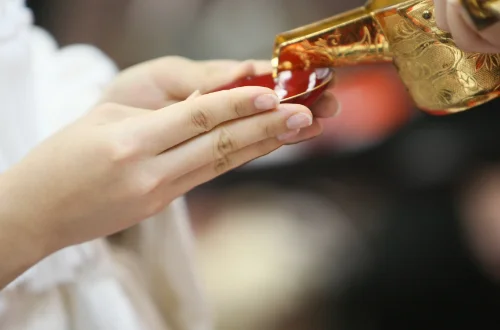
Kyoto sake offers a balanced, rounded, and gentle mouthfeel when sipped. Moderate umami and sweetness create a full, expansive flavor, alongside an elegant aroma that softly spreads through the mouth. It is a sake that complements food without overpowering it, bringing out the best in each.

GI “Kyoto” Production Standards
Seishu (sake)
Designated: October 1, 2025
1. Characteristics of the Sake Attributable to Its Place of Origin
(1) Characteristics of the Sake
Kyoto sake is characterized overall by a harmonious, rounded, soft mouthfeel when sipped, together with
a full-bodied flavor produced by moderate umami and sweetness, accompanied by an elegant aroma that
unfolds across the palate.
Kyoto sake complements cuisine without overpowering it, allowing sake and food to enhance one another.
(2) How These Characteristics Are Attributable to the Place of Origin
-
Natural Factors
Kyoto Prefecture is located at roughly the center of the Japanese archipelago and has an elongated north-south topography. A mountain range runs east-west through the center of the prefecture, forming the Tamba Plateau. This ridge divides the region’s water systems: the Yura River system flows toward the Sea of Japan, while the Yodo River system flows toward the Pacific Ocean. Together, these systems provide abundant water resources throughout the prefecture. The bedrock is primarily granite, and water filtered through these formations becomes the soft to moderately hard water that draws out the characteristics of Kyoto sake.
In winter, the northern region receives heavy snowfall due to the Tsushima Current, while the southern Kyoto Basin experiences the distinctive sokobie, a piercing chill that seeps up from the ground, making winters generally severe.
These high-quality, abundant water resources and the cold climate enable gentle fermentation of the moromi, resulting in a sake character with a soft mouthfeel, moderate umami and sweetness, and full-bodied flavor. -
Human Factors
Sake brewing in Kyoto has an extremely long history. During the Heian period, the Miki no Tsukasa (Office of Sake Brewing) was established within the Imperial Palace, overseeing the brewing, storage, and management of sake. According to the Heian-era legal compendium Engishiki, specialists known as sakabe at the palace brewed 13 varieties of sake, most of which were reserved for the Emperor and the Imperial Court.
Kyoto’s culinary history is equally ancient. Originating in the banquet culture of Heian-period nobility, it developed through successive eras into diverse culinary systems—daikyo, shojin, honzen, kaiseki, and obanzai—developing a cuisine built on dashi, now known as Kyo-ryori. Kyo-ryori is characterized by its delicate flavors that bring out the essence of its ingredients. Accordingly, Kyoto sake was refined to match: elegant in aroma, soft on the palate, and full-bodied in character. These qualities allow sake and cuisine to enhance one another.
Around the 12th century, brewers established a technique called to, in which steamed rice, koji, and water are added to the moromi in successive stages, laying the foundation for the modern sandan-jikomi (three-step mash preparation) process. After the establishment of the toji system in the Edo period, Kyoto actively incorporated techniques from various toji traditions, including Tango, Tamba, Tajima, and Echizen. Through mutual competition and refinement, brewers cultivated advanced expertise. These skills were highly prized even then, to the extent that labor-placement offices such as the Tango-yado were established to recruit brewers.
In the Meiji era, amid safety concerns about preservatives (salicylic acid), Kyoto developed a method of heat-sterilizing and sealing sake in glass bottles, releasing Japan’s first preservative-free sake. This technology spread nationwide and enabled brewing that combined superior quality with safety, revolutionizing the entire sake industry. In the postwar Showa era, as nationwide demand surged and shortages of toji and kurabito (brewery workers) became critical, year-round brewing technology was developed to enable production by permanent employees. Kyoto was among the first to adopt this technology, establishing a new production system that balanced volume with quality.
This continuous technological innovation demonstrates that sake brewing in Kyoto has not merely relied on tradition but has evolved with the times.
In Kyoto, sake brewing and food culture have developed hand in hand, establishing a sake character in which the two enhance one another. By fusing tradition with innovation, Kyoto has continued to create distinctive value, and today ranks among Japan’s leading sake-producing regions.
2. Ingredients and Production Methods
(1) Ingredients
- The rice and koji malted rice must be made using domestically produced rice
- Only water sourced within Kyoto Prefecture is used
- Other Ingredients: Only ingredients for “seishu” stipulated in Article 3, Item 7 of the Liquor Tax Act (Act No. 6 of 1953) must be used. However, of the ingredients for seishu specified in Article 2 of the Liquor Tax Act Enforcement Order (Cabinet Order No. 97 of 1962), no ingredient other than alcohol must be used, and alcohol may only be used when its weight does not exceed 50% of the weight of the rice (including rice koji).
(2) Production method
- The sake must be brewed within Kyoto Prefecture using methods defined under Article 3, Item 7 of the Liquor Tax Act.
- If the sake is stored during the production process, storage must take place within Kyoto Prefecture.
- The sake must be bottled within Kyoto Prefecture into containers intended for the final consumer.
3. Management Requirements for Maintaining Product Characteristics
To use the Geographical Indication “Kyoto,” the sake must be verified as meeting the standards in Sections 1 and 2 above by the following body (“the Management Body”), in accordance with the operational guidelines prepared by the Management Body, before the sake is shipped from the production facility (including facilities deemed licensed production facilities under Article 28, Paragraph 6 or Article 28-3, Paragraph 4 of the Liquor Tax Act, excluding shipments subject to Article 28, Paragraph 1).
[Administrative body]
- Name
- Kyoto Prefecture Sake Brewers Cooperative Association
- Address
- 322-2 Nishi-Otecho, Fushimi-ku, Kyoto City, Kyoto Prefecture
- Phone
- 075-611-4115
- Website
- https://kyoto-sake.sakura.ne.jp/
4. Category of Alcoholic Beverage
Seishu (sake)